 Skip to content

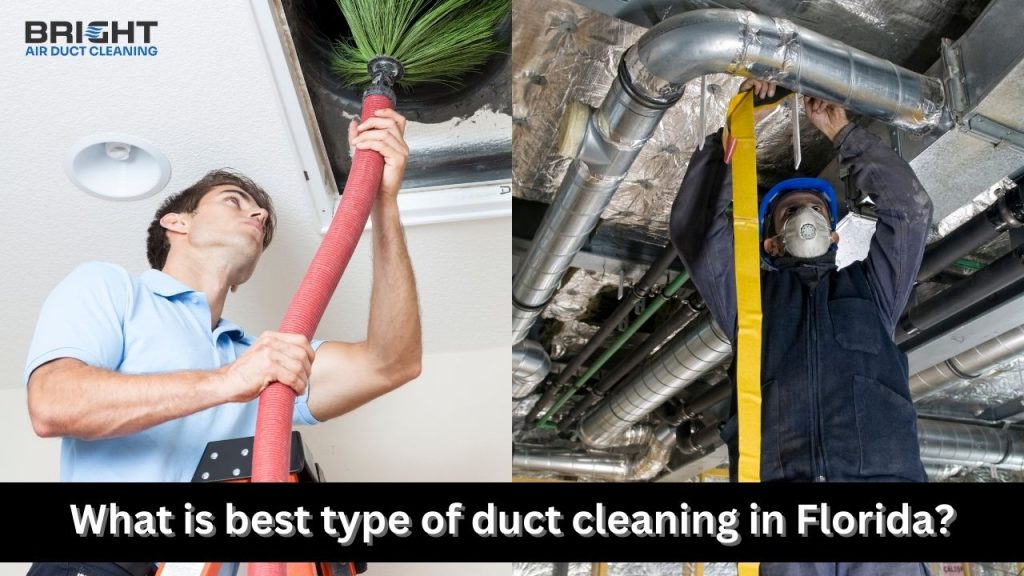
Air duct cleaning is the process of removing dust, dirt, mold, and other contaminants from the air ducts in your home. This essential maintenance helps improve indoor air quality and ensures that your air conditioning system operates efficiently. So, What is best type of duct cleaning in Florida? Over time, dust and allergens can accumulate in your ducts, which can restrict airflow and cause various health issues. Air duct cleaners use specialized tools and techniques to thoroughly clean the ducts, helping to maintain a healthier environment. Regular proper cleaning and maintenance by professional duct cleaning companies is crucial for extending the life of your HVAC system and preventing costly repairs.
What Are the Different Types of Air Duct Cleaning?
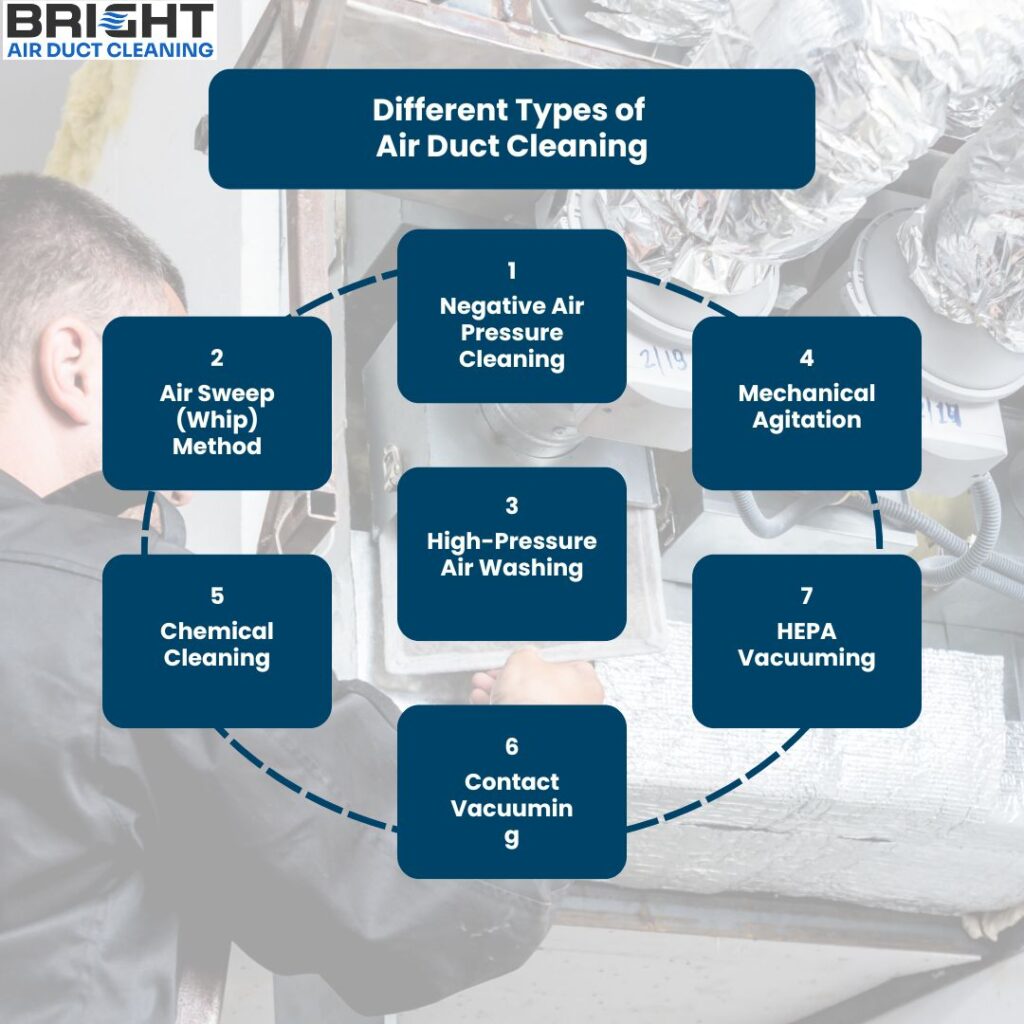
Air duct cleaning is essential for maintaining indoor air quality and ensuring the efficient operation of your heating and air conditioning systems. Various methods are employed to clean your air ducts, each with its unique approach and effectiveness. Below are the primary types of air duct cleaning:
Negative Air Pressure Cleaning
This method is one of the most efficient ways to clean your air ducts. The entire HVAC system is placed under negative pressure by using a powerful vacuum. Technicians insert specialized brushes and compressed air nozzles to dislodge debris stuck to the duct surfaces. The contaminants are then suctioned away, ensuring that no dust or pollutants escape back into your indoor environment. This approach is ideal for removing dust, mold, and allergens from the entire system, improving indoor air quality and system performance .
Air Sweep (Whip) Method
The Air Sweep method uses a flexible rotating whip or brush that moves through the ductwork to break up and dislodge debris. Compressed air is then used to loosen the particles, and a vacuum simultaneously sucks them out of the system. This method is very effective at cleaning duct surfaces, especially in residential and light commercial systems. The whip technique ensures that every inch of the ducts is addressed, improving the airflow and preventing the buildup of contaminants that could negatively impact your system’s efficiency and your health .
High-Pressure Air Washing
High-pressure air washing uses a stream of compressed air to forcefully blast debris from the walls of your ducts. This method is often combined with powerful vacuum systems to extract the contaminants once they are dislodged. The high pressure allows for deep cleaning, particularly for difficult-to-reach areas in the duct system. This technique is especially beneficial for clearing out stubborn dirt, mold, and other pollutants, ensuring that your entire HVAC system is thoroughly cleaned without any residual buildup that could contribute to poor indoor air quality .
Mechanical Agitation
Mechanical agitation involves using brushes, air whips, or other specialized tools to physically scrub and dislodge debris from the duct surfaces. These tools are inserted into the ducts to break up dirt, dust, and mold. The debris is then vacuumed out to prevent it from recirculating in your indoor air. This method is effective for general cleaning and works well when you need to clean your air ducts without using chemicals. However, it may not be as effective for systems with heavy buildup or biological contamination .
Chemical Cleaning
When mold or biological contaminants are found in your ductwork, chemical cleaning may be necessary to sanitize and disinfect the system. Specialized cleaning agents are introduced to kill mold, bacteria, and other harmful organisms. This method helps to improve indoor air quality, but it should be used with caution to avoid chemical residue in the ducts. Often, chemical cleaning is paired with mechanical or air pressure cleaning to ensure that contaminants are thoroughly removed, and the entire HVAC system is sanitized for optimal performance .
Contact Vacuuming
In contact vacuuming, a vacuum is used along with a brush to scrub the duct surfaces, physically removing dust and debris. This method works best for light cleaning or when contaminants are not deeply embedded. While it’s an effective preliminary step, contact vacuuming may not be sufficient for cleaning ducts with heavy buildup. It’s often used in conjunction with other methods like negative air pressure cleaning to ensure that the entire system is properly cleaned and indoor air pollution is minimized .
HEPA Vacuuming
HEPA vacuuming utilizes a high-efficiency particulate air (HEPA) filter to capture even the tiniest particles from your ducts. This method is particularly useful for homes with allergy sufferers, as it ensures that even microscopic allergens and dust are safely removed. The HEPA vacuum is used in conjunction with other cleaning techniques to ensure that all debris is extracted from the entire system. This method improves the indoor air quality significantly, preventing allergens from recirculating and providing cleaner, healthier air for your home .
What is best type of duct cleaning in Florida?
The best type of duct cleaning in Florida depends on factors like humidity levels, mold growth, and air quality concerns.
| Cleaning Method | How It Works | Best For |
| Brush Cleaning | Rotating brushes scrub dust & debris from ducts | Minor dust buildup |
| Air Sweep/Vacuum Cleaning | High-pressure air pushes dust out & vacuums remove it | General duct cleaning |
| Steam Cleaning | Hot steam kills mold, bacteria & allergens | Mold & bacteria removal |
| Chemical Sanitization | Disinfectant solutions eliminate bacteria, viruses & odors | Allergy-prone households |
| Negative Air Pressure Cleaning | Powerful suction removes deep-seated dust & debris | Deep cleaning & heavy dust accumulation |
Brush Cleaning
Brush cleaning involves using rotating brushes to scrub the interior surfaces of air ducts, loosening dust, dirt, and minor debris buildup. This method is ideal for lightly contaminated ducts that require basic maintenance. However, it may not be the best type of duct cleaning if there is stubborn mold, bacteria, or deep-seated allergens. Homeowners who want a cost-effective way to prevent dust accumulation can benefit from brush cleaning as part of routine HVAC maintenance.
Air Sweep/Vacuum Cleaning
Air sweep cleaning, also known as vacuum cleaning, utilizes high-pressure air to push dust and debris through the ductwork, while a powerful vacuum system extracts the dislodged contaminants. This method is commonly used for general duct cleaning as it effectively removes dust and minor particles. It is a safe and non-invasive technique, making it suitable for homes and businesses that require regular maintenance without harsh chemicals.
Steam Cleaning
Steam cleaning is one of the most effective types of air vent cleaning for Florida’s humid climate, where mold and bacteria thrive. This method uses high-temperature steam to kill mold spores, bacteria, and allergens inside the ductwork. It is particularly beneficial for homeowners experiencing musty odors, allergy symptoms, or visible mold growth. Additionally, steam cleaning sanitizes air ducts naturally without harsh chemicals, making it a safe and eco-friendly choice.
Chemical Sanitization
Chemical sanitization involves applying EPA-approved disinfectants to eliminate bacteria, viruses, mold, and odors inside air ducts. This method is particularly useful for allergy-prone households, hospitals, and commercial buildings where air quality is a major concern. Chemical sanitization provides long-lasting protection against microbial growth, but it should always be performed by certified professionals to ensure the safe use of sanitizing agents.
Negative Air Pressure Cleaning
Negative air pressure cleaning, also known as negative air duct cleaning, is a highly effective method that uses powerful industrial-grade vacuums to create negative pressure within the duct system. This forces deep-seated dust, debris, and contaminants to be extracted efficiently. This method is best for homes with excessive dust buildup, pet dander, or construction debris and is often recommended for deep cleaning commercial and residential HVAC systems.
Final Words
So, What is the best type of duct cleaning in Florida? The best type of duct cleaning is to combat high humidity, mold growth, and dust accumulation that can negatively impact indoor air quality and HVAC efficiency. The best way to clean air ducts include steam cleaning for mold and bacteria removal, negative air pressure cleaning for deep dust extraction, and chemical sanitization to eliminate allergens and bacteria.
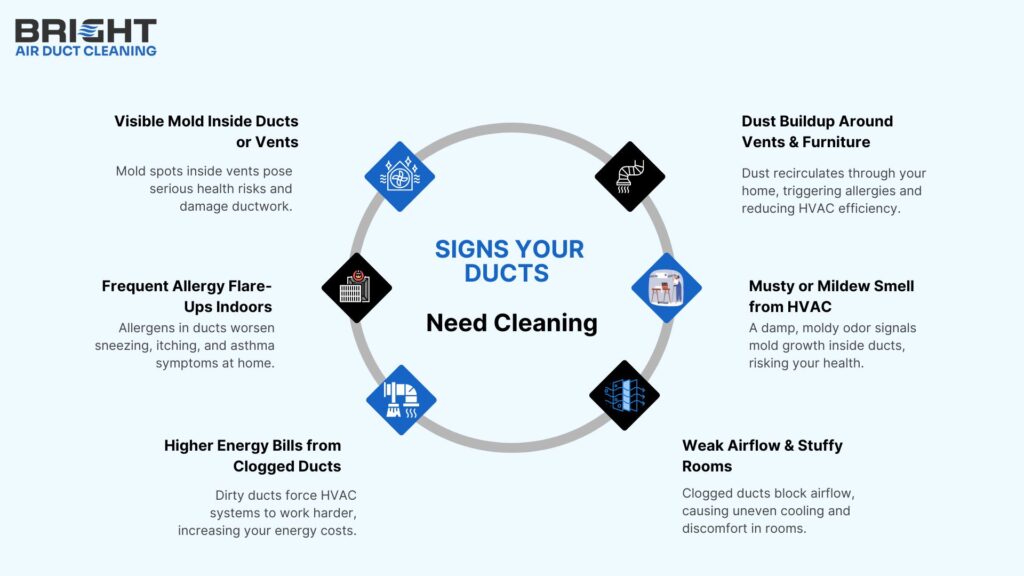
While some may make claims about the health benefits of residential air duct cleaning, it’s crucial to ensure that your ducts are properly cleaned to achieve the desired results. For optimal air quality and energy efficiency, homeowners should schedule professional duct cleaning every 2-3 years. This cleaning is essential in maintaining both the health of your home’s air and the longevity of your HVAC system. Stay proactive by monitoring signs like musty odors, weak airflow, and allergy symptoms. Always trust experts who provide duct cleaning services that use effective methods to ensure your ducts are free from dust, dirt, and other harmful contaminants.
Frequently Asked Questions
What is the most effective duct cleaning method?
The most effective duct cleaning method depends on your home’s needs and the condition of your system. Negative air pressure cleaning is one of the most popular methods, as it uses a powerful vacuum to extract dust or debris from the ducts, ensuring thorough cleaning. Steam cleaning can also be effective, particularly for removing mold and bacteria, while chemical sanitization helps eliminate allergens and bacteria from the air. Regardless of the method, the technicians must know your duct material to prevent damage. These techniques can ensure cleaner air and improved airflow throughout your living space, which can help clean the air circulating in your home.
Which Is the Best Way to Clean Air Ducts: DIY or Hiring?
The best way to clean air ducts depends on several factors, including the complexity of the job and the state of your HVAC system. Hiring professional duct cleaning services typically ensures that every aspect of your system is cleaned thoroughly. Professionals have the right tools and expertise to handle the job efficiently and can clean all components of the system, including the vents, coils, and filters. DIY cleaning might seem cost-effective, but it’s challenging to reach all areas of the ducts and could potentially cause damage to the system or miss contaminants like microbial contamination. For a system cleaned to optimal standards, it’s usually better to hire experts who can ensure proper cleaning, minimize health risks, and improve airflow.
How to choose an air duct cleaning service?
When selecting an air duct cleaning service, look for companies that are certified by reputable organizations, such as the National Air Duct Cleaners Association (NADCA). A good service provider will conduct a thorough inspection of your system, including checking for microbial contamination, debris buildup, and any blockages. Beware of companies that make unrealistic promises, as some claims are unsubstantiated or might involve aggressive marketing tactics.
Can I Clean My Air Ducts Myself?
While it’s possible to clean certain parts of your air ducts yourself, it’s generally not recommended for a few reasons. First, accessing all areas of the ducts requires specialized tools and knowledge. Cleaning all components of the system is crucial for removing contaminants effectively. You may also risk damaging the system or disturbing delicate components. For example, microbial contamination or mold growth may not be fully addressed with DIY methods, which could affect your home’s air quality. It’s often safer and more effective to hire professionals to ensure a system cleaned thoroughly and efficiently.
Do you have any Duct cleaning recommendations?
If you’re looking to clean your ducts, hiring a certified professional air duct cleaning service is usually the best route. It’s important to check that the service includes removing debris from all areas of the system, including coils, filters, and the blower. Also, ensure the technicians inspect for any microbial contamination, such as mold, which requires special cleaning. Look for services that provide access to every part of the system, including access holes, and make sure the system is cleaned entirely. Always ask for references or reviews from previous customers to gauge the service quality.
